
Now booking Middle Tennessee projects for spring 2027. Best Coast begins installing in Franklin, Brentwood and the Nashville area in spring 2027. Call (615) 807-0582 to get on the early schedule. In Southern California? Compare quotes from local contractors.
Polyaspartic Floor Coating in Nashville and Franklin, TN
A polyaspartic floor coating is usually what people are asking for when they call us about an “epoxy floor.” It is the clear, UV-stable topcoat that keeps a flake garage floor from yellowing, lets you park a day or two after we leave, and goes down when a Middle Tennessee slab is cold, damp, or on a tight schedule. Starting in spring 2027, we will install polyaspartic floor coatings across Franklin, Brentwood, Spring Hill, Nolensville, and the rest of Williamson County ourselves, with no subcontractors.
This page covers what polyaspartic is, how it compares with epoxy, whether a one-day polyaspartic garage floor coating is a real system or a shortcut, what it costs here, and how it handles a Tennessee summer and winter. We sell both products, so we have no reason to oversell either.
If you already know you want a flake garage floor, our page on garage floor coatings in Franklin walks through that project from grinding to the last coat.
What Polyaspartic Floor Coating Actually Is
Polyaspartic is an aliphatic polyurea. In plain language, it is a two-part coating, resin and hardener, that reacts into a hard, flexible, clear film. The “aliphatic” part matters for a floor: aliphatic chemistry does not break down under ultraviolet light, so the coating stays clear and the color underneath stays true. Standard epoxy is aromatic, which is why an epoxy floor near a sunny garage door slowly turns amber.
The “polyurea” part is what gives polyaspartic its speed. The reaction runs fast and does not depend on warm concrete, so the floor is walkable in hours and ready for a vehicle in about 24–48 hr, where epoxy needs about 3 days. Chemists slowed the original polyurea reaction so an installer could roll it out, which is why polyurea floor coating and polyaspartic floor coating get used interchangeably.
The trade-offs are cost and build. Polyaspartic resin costs more per gallon than epoxy, each coat lays down thinner, and its short working time rewards installers who have rolled a lot of it. Those facts drive every recommendation below.
Talk to the person who will install your floor
We quote the system that fits your floor rather than the one with the best margin.
Get a Free Franklin Floor QuotePolyaspartic vs Epoxy: When Each One Wins
The polyaspartic vs epoxy question gets framed as a fight, and it is not one. Epoxy wins as the base coat: it soaks into diamond-ground concrete, builds thickness in one pass, and bonds harder to the slab than anything else at the price. That bond and build stop hot-tire pickup, the peeling that happens when plasticizers in warm tires soften a thin or poorly bonded coating.
Polyaspartic wins as the topcoat. It locks the flake in, never ambers, handles gasoline, road salt, and brake fluid better than epoxy, and cures fast enough that you get the garage back the next day. Epoxy under polyaspartic is what we install on most garages, and it will be our standard in Franklin and Brentwood.
We go full polyaspartic, a polyurea or polyaspartic base under a polyaspartic top, in three situations. Temperature: 100%-solids epoxy cures poorly below 50°F, and an unheated garage in January can sit there for weeks. Humidity: no coating should go down within 5°F of the dew point, and polyaspartic tolerates a humid slab far better. Schedule: if you cannot lose the garage for two days, full polyaspartic is the honest way to deliver one. Each costs more in material and builds slightly thinner, and we say so up front.
| System | Best For | Build Thickness | Cure to Park | Estimated Price per sq ft |
|---|---|---|---|---|
| Solid-color epoxy | Budget garages and storage rooms | Approx. 20–30 mil | About 3 days | $4–$7 |
| Flake epoxy (epoxy base + polyaspartic topcoat) | Most Franklin garages and basements | Approx. 30–40 mil | About 3 days (epoxy base governs) | $5–$8 |
| Full-flake polyaspartic (polyurea/polyaspartic base + polyaspartic top) | Cold or humid slabs, one-day jobs, patios | Approx. 25–40 mil | 24–48 hr | $6–$9 |
| Metallic epoxy | Showrooms and finished basements | Approx. 35–45 mil | About 3 days | $8–$15 |
| Commercial (thin-mil to urethane mortar) | Warehouses, kitchens, shops | Approx. 3 mil to 1/4 in | Varies by system | $3–$15 |
Prices are Middle Tennessee installed estimates; final quotes follow an on-site slab inspection. Build thicknesses are typical ranges.
One-Day vs Two-Day Polyaspartic Systems, Honestly
“One-day floor coating” is advertised all over Middle Tennessee, and we want to be fair to it. A one-day polyaspartic system is legitimate: a fast-set polyurea or polyaspartic base, flake broadcast wet, topcoat a few hours later. On the right slab it is a good floor.
What it trades away is time and thickness. An epoxy base needs overnight to wet out the ground concrete and cure hard before it is topcoated. A one-day base skips that wait, so it is thinner and has less time to build bond. On a sound, dry slab that is fine. On a damp, cracked, or previously coated slab, it is where we see problems a year or two later.
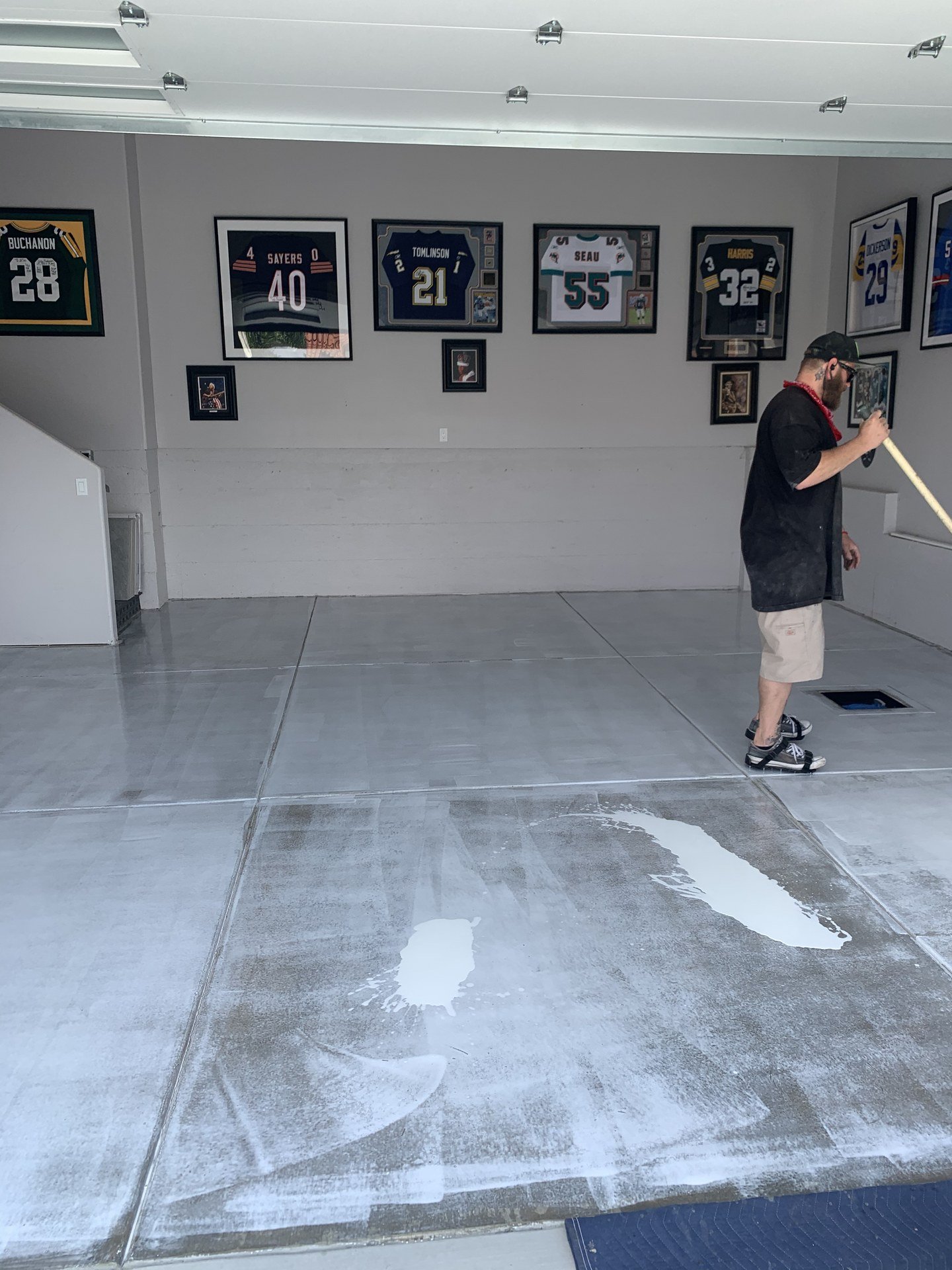
Our default is two days: grind, test, repair, and epoxy base with full flake on day one; scrape, vacuum, and polyaspartic topcoat on day two. We move to a one-day polyaspartic garage floor coating when the schedule demands it, when winter makes an epoxy cure unreliable, or when the slab is sound enough that the trade-off does not matter. One day is our default only for a business that cannot close for two, so fast-turnaround commercial floors are usually full polyaspartic.
Why Polyaspartic Suits Middle Tennessee
Franklin gets both ends of the thermometer. Per NWS Nashville climate data, the area averages 67 days a year at or below 32°F and 49 days at or above 90°F. Humidity averages about 70%, peaking near 74% in September. Annual precipitation is 50.51 in, much of it held in clay-heavy soil over limestone beneath the slab.
Each number works against plain epoxy: January garages drop below the 50°F point where 100%-solids epoxy stops curing, humid summer mornings put the slab within 5°F of the dew point, hot stretches bring tires home soft and sticky, and wet clay pushes vapor up through the concrete year round.
A UV-stable floor coating that cures in cold, tolerates humidity, and resists tire plasticizers answers that list, and its wide application window lets us work in months when epoxy would wait. It does not fix moisture, though. Standard coatings tolerate roughly 3 lb of vapor per 1,000 sq ft per 24 hr; above that, or above about 75–80% in-slab relative humidity, the slab needs a vapor-barrier primer, so we test every floor. Our Franklin epoxy flooring overview goes deeper on how local slabs behave.
Where We Use Polyaspartic Floor Coating
Garages are the biggest share of our polyaspartic work. Nearly every flake garage floor we install carries a polyaspartic topcoat, and cold-weather and one-day jobs use it as the base. For a full walk-through, our two-day flake garage floor system page covers it.
Basements come next. A Middle Tennessee basement slab is usually the coolest, dampest concrete in the house, which makes polyaspartic a safer topcoat there than a second coat of epoxy. We cover basement slabs in the residential floor coating guide for Franklin.
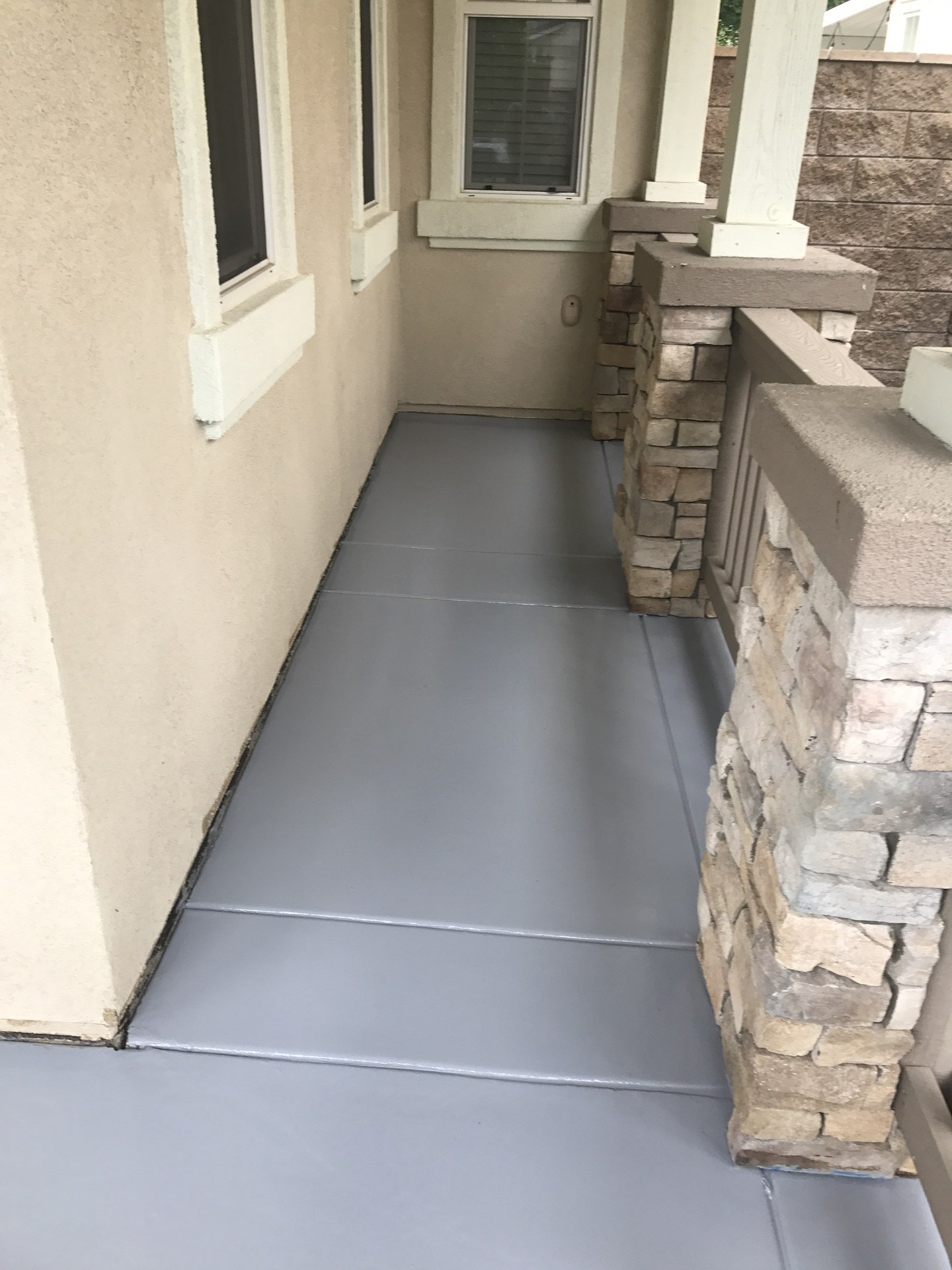
Covered porches, patios, and pool decks are where UV stability stops being optional, since daily sun ambers an aromatic epoxy within a season. Outdoors we run full polyaspartic with an anti-slip additive, because a clear coat over smooth concrete gets slick when wet.
Shop floors, detail shops, and back-of-house areas in restaurants and retail round out the list; they want chemical resistance and a fast return to service. For larger facilities that need thin-mil systems or urethane mortar, our commercial epoxy flooring service is where that conversation starts.
Polyaspartic Coating Cost in Franklin
Polyaspartic coating cost comes down to how much of the system is polyaspartic. Our Middle Tennessee estimate for a flake floor with an epoxy base and polyaspartic topcoat is $5–$8 per sq ft, which puts a typical 400–500 sq ft two-car garage at roughly $2,300–$3,800. A full-flake polyaspartic system runs $6–$9 per sq ft, about $2,500–$4,500 for the same garage. The difference is almost entirely material.
HomeGuide’s polyaspartic cost guide reports similar national ranges, and Franklin sits near the middle. Add-ons are quoted separately. A vapor-barrier primer, when the slab calls for it, adds $1.50–$3.50 per sq ft. Crack repair is $2–$4 per sq ft of repaired area, stem walls are $3–$5 per linear foot, and an anti-slip additive is $0.25–$0.50 per sq ft. Nothing gets added after the grind starts unless you approve it. The full pricing breakdown for Franklin lists every system and add-on.
How We Install a Polyaspartic Floor
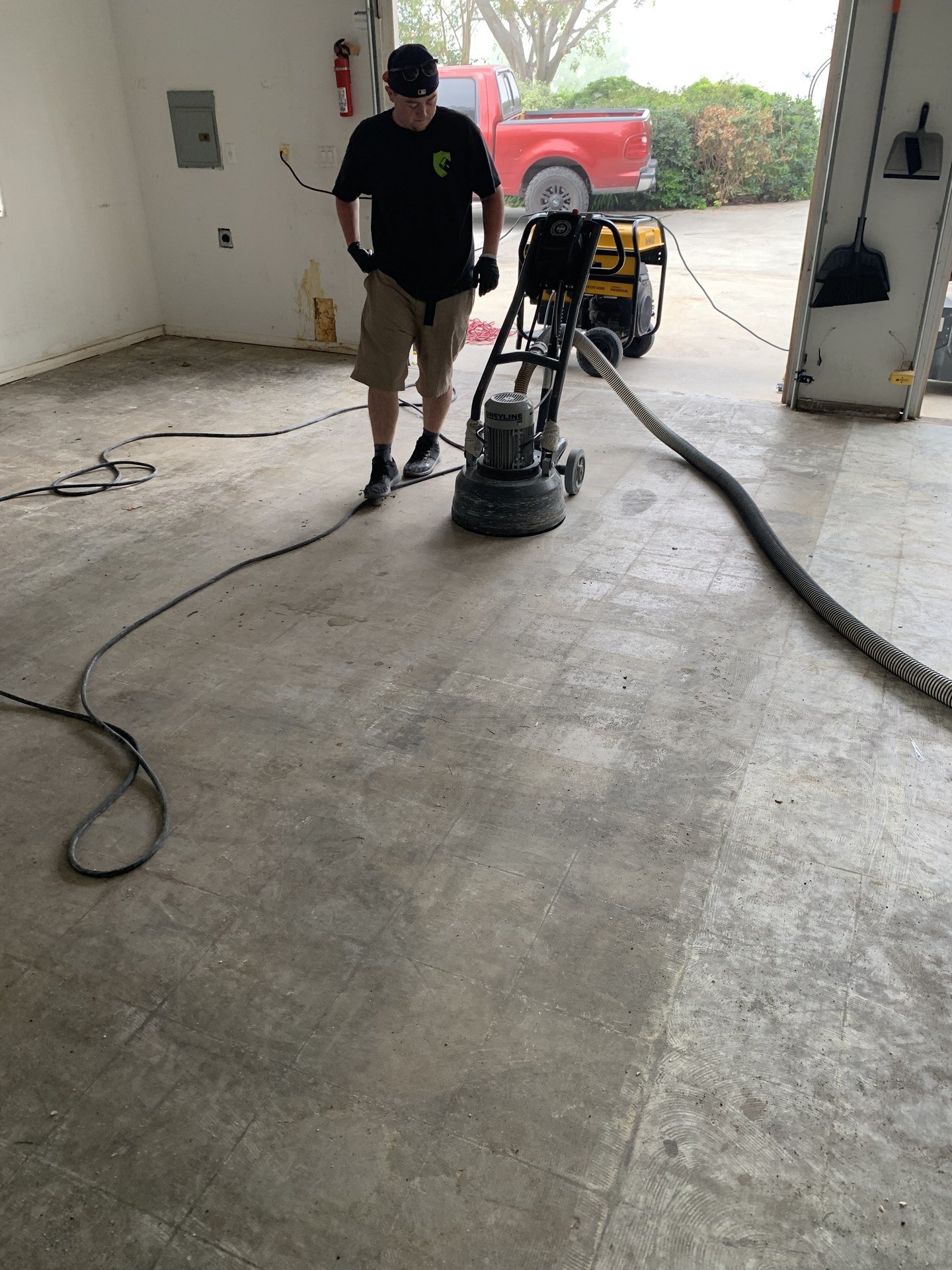
Every polyaspartic floor we install starts the same way. We diamond-grind the slab with dust extraction; we never acid-etch, because etching leaves a weak profile and is the leading cause of failure we see. We check the slab against the day’s dew point. Cracks and joints get cut, filled with rigid polyurea filler, and ground flush. High moisture readings mean a vapor-barrier primer goes down first.
On a two-day system, the epoxy or polyurea base goes on next and the flake is broadcast to full rejection. That cures overnight. Next morning we scrape loose flake, sand high spots, vacuum twice, and roll the polyaspartic topcoat in tight, overlapping passes. Its short pot life means small batches and a two-person crew so the wet edge never sits. You walk on it that evening and park in 24–48 hr.
On a one-day system, the base is fast-set polyaspartic or polyurea, the flake goes in wet, and we scrape and topcoat the same afternoon. Our day-by-day garage installation schedule lays both versions out day by day.
Caring for a Polyaspartic Floor
A cured polyaspartic floor asks very little. Sweep grit, because sand under tires is what dulls any coating over time. Wash with warm water and a neutral cleaner; skip citrus degreasers and solvents, which can haze the surface. Wipe up brake fluid and gasoline, put a mat under a kickstand or jack stand, and hose off road salt in winter. No waxing, no re-sealing, no annual topcoat.
About the installer
I am Ryan Pepple, founder and lead installer at Best Coast Epoxy Coatings. I have spent 15 years installing epoxy and polyaspartic floors by hand. I built this company solo in Temecula and Murrieta, California, and I’m bringing it to Franklin, Tennessee, where we start installing with a local crew in spring 2027.
I will personally inspect every slab we quote; that is how we will decide between epoxy and polyaspartic, one day and two, and whether you need a vapor barrier. Reach me at (615) 807-0582 or hello@bestcoastepoxycoatings.com. You can read how we work on the Best Coast Epoxy Coatings homepage.
Polyaspartic Floor Coating FAQ
Is polyaspartic better than epoxy?
Not universally. Polyaspartic is the better topcoat: UV-stable, fast-curing, resistant to chemicals and hot tires. Epoxy is the better base coat: it bonds harder and builds thicker. The best residential floor uses both. Full polyaspartic makes sense when cold, humidity, or a one-day schedule rules epoxy out.
How long does a polyaspartic floor coating last?
On a properly ground, moisture-tested slab, a polyaspartic-topped garage floor routinely holds up 10 to 20 years without yellowing. Lifespan depends far more on prep and moisture control than on the brand of resin. We offer a written warranty; ask for the terms.
Is a polyaspartic floor slippery?
Clear polyaspartic over a full flake broadcast has real texture and is not especially slippery. A smooth solid-color polyaspartic can be slick when wet, so for patios, pool decks, and garages where water is tracked in we add anti-slip aggregate for $0.25–$0.50 per sq ft.
Can polyaspartic go over an existing epoxy floor?
Sometimes. If the existing epoxy is well bonded, we can sand it, clean it, and topcoat it with polyaspartic. If it is peeling, hot-tire marked, or was applied over an acid-etched or damp slab, it has to be ground off. We test adhesion first.
Does polyaspartic smell, and is it safe indoors?
It has a solvent odor during application that fades within about a day. It is lower in odor than many solvent-based epoxies but not odorless. We ventilate, wear respirators, and ask that people and pets stay off until it is walkable. Once cured it is inert and safe for basements and interiors.
Can polyaspartic be applied in winter?
Yes, and that is a major advantage here. Polyaspartic cures where 100%-solids epoxy will not, so we can coat unheated Franklin garages through the 67 days a year that dip to freezing. The slab still has to be dry and at least 5°F above the dew point, and cure times stretch in the cold.
How much more does polyaspartic cost than epoxy?
In Middle Tennessee, a flake floor with an epoxy base and polyaspartic topcoat runs about $5–$8 per sq ft; a full-flake polyaspartic system runs about $6–$9. Solid-color epoxy runs $4–$7. The gap is mostly material cost, since polyaspartic resin is more expensive per gallon.
Is a one-day polyaspartic floor legitimate?
Yes. One-day systems use a fast-set polyaspartic or polyurea base so flake and topcoat go on the same day. The trade-off is a thinner base with less cure time, which matters more on damp or cracked slabs than sound ones. We default to two days and go one-day when schedule, weather, or slab conditions call for it.
What is the difference between polyurea and polyaspartic?
Polyaspartic is a type of aliphatic polyurea. Traditional polyurea cures in seconds, which makes it hard to roll on a floor, and many polyureas are not UV stable. Polyaspartic is formulated to cure slower and stay clear in sunlight, so it can be rolled, it bonds well, and it does not yellow. When floor companies say polyurea floor coating, they usually mean a polyurea base coat with a polyaspartic topcoat.
Can polyaspartic be used on a porch, patio or driveway?
Covered porches and patios are a good fit, because polyaspartic handles UV and temperature swings far better than epoxy. We add an anti-slip aggregate outdoors. Driveways are a harder case: open slabs, road salt and vehicle loads make most coatings a short-lived choice, so we usually recommend sealing a driveway rather than coating it.
Get an honest polyaspartic quote for your Franklin floor
Tell us what the floor has to handle; we will test the slab and price the system that fits. Serving Franklin, Brentwood, Spring Hill, Nolensville, Thompson’s Station, College Grove, Arrington, Fairview, Cool Springs, Nashville, Murfreesboro, and Columbia.
Call (615) 807-0582Request a Free Floor Quote
Tell us about your floor and we will reply with a price range. Prefer to talk? Call (615) 807-0582.